
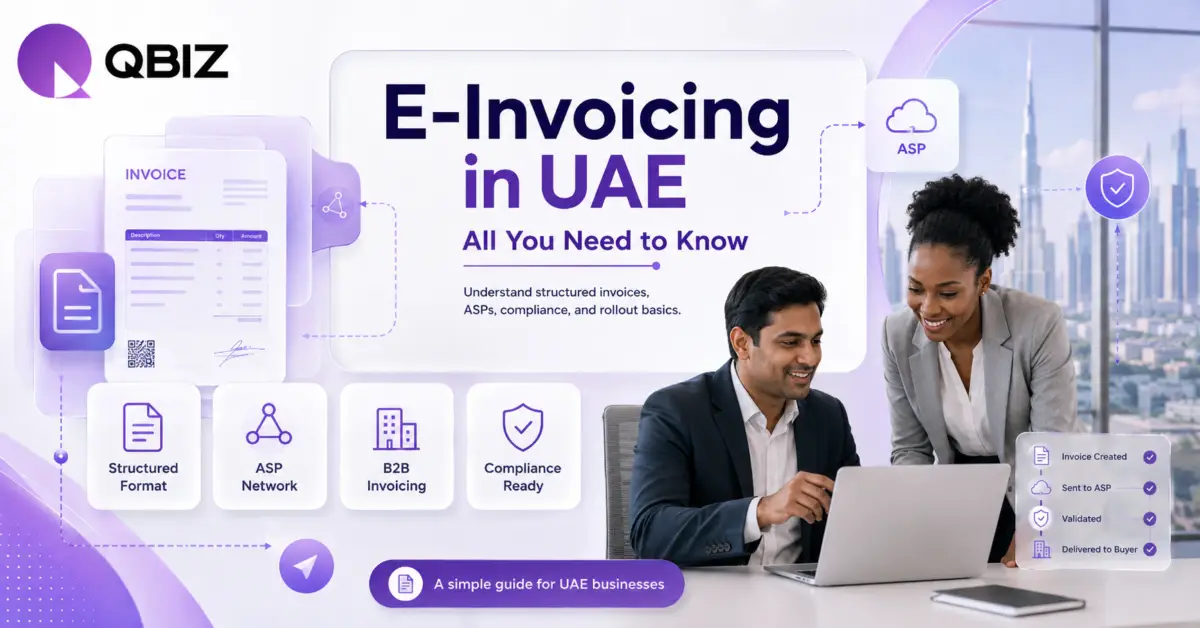
UAE E-invoicing: All You Need to Know
E-invoicing in UAE is going to change how businesses create, send, receive, and report invoices. For many business owners, invoicing currently means making a PDF, sending it by email, and keeping a copy for accounts. However, e-invoicing works differently.
It is not just a digital copy of a paper invoice. Instead, it is a structured electronic invoice that accounting systems can read, businesses can exchange, and authorities can receive through approved systems.
Here is the simple breakdown.
What is UAE E-Invoicing?
UAE e-invoicing is the process of issuing, sending, receiving, and storing invoices in a structured electronic format. This means the invoice is not only made for people to read. Software systems must also be able to read and process it automatically.
Once e-invoicing becomes mandatory, a normal PDF invoice, scanned invoice, or image of an invoice will not be enough. The invoice must follow the required electronic format and move through the approved e-invoicing system. In simple words:
Your invoice becomes a proper digital business document, not just an attachment sent by email.
Why is the UAE Introducing E-Invoicing?
The UAE is moving towards e-invoicing to make business transactions more transparent, faster, and easier to track. It helps with:
- Better tax compliance
- Cleaner invoice records
- Faster invoice processing
- Fewer manual errors
- Better audit readiness
- Reduced paperwork
- Easier reporting to authorities
For businesses, this can make invoicing more organised over time. At the same time, companies need to prepare their systems, data, and accounting process properly.
Is E-Invoicing Part of Corporate Tax?
No. E-invoicing is not something you do once a year as part of Corporate Tax. It is part of your normal invoicing process. When your business issues an invoice that falls under e-invoicing rules, that invoice will need to be created and exchanged through the approved system. Think of it like this:
- Corporate Tax is usually annual
- VAT filing is periodic
- Bookkeeping is ongoing
- E-invoicing happens when invoices are issued
So, if your company raises invoices regularly, e-invoicing becomes part of your daily or weekly business process.
Who Will UAE E-Invoicing Apply To?
UAE e-invoicing is expected to apply mainly to business transactions. This includes:
- Business to Business transactions
- Business to Government transactions
- Government to Business transactions
- Government to Government transactions
If your UAE company invoices another company, e-invoicing may apply once your phase starts. This can include freezone companies, mainland companies, VAT-registered companies, and even some businesses that are not VAT registered. So the rules are not only about VAT. They are about business invoicing.
Does It Apply to B2C Sales?
Generally, consumer sales are not the main focus of the current e-invoicing system. If a business sells directly to an individual consumer, that transaction may be outside the main e-invoicing scope.
However, businesses should still be careful. If you sell to companies, government entities, or other business customers, your invoices may come under e-invoicing once the rules apply to your category.
What is an ASP?
ASP stands for Accredited Service Provider. In UAE e-invoicing, the ASP plays a central role in the exchange and reporting of electronic invoices.
An ASP is an approved technology provider that connects your business invoicing system to the UAE e-invoicing network. The ASP does not simply create an invoice for you.
Instead, it helps make sure the invoice is created in the correct electronic format, sent through the approved network, received by the buyer’s system, and reported to the relevant authority where required. In simple words:
The ASP is the approved digital bridge between your business, your customer, and the authorities. The ASP may support with:
- Sending electronic invoices
- Receiving electronic invoices
- Validating invoice data
- Converting invoice information into the required format
- Reporting required invoice data
- Confirming whether the invoice was successfully exchanged
- Helping identify errors in the invoice flow
- Supporting integration with accounting or invoicing software
This is why choosing the right ASP matters. If your business issues many invoices, works with corporate clients, or has complex transactions, the ASP should be able to support your accounting system, invoice volume, business process, and compliance needs.
Are ASPs Accounting Firms?
Not necessarily. An accounting firm and an ASP are not the same thing. An accountant usually helps with bookkeeping, VAT, Corporate Tax, reconciliations, financial records, and filing support.
On the other hand, an ASP handles the technical side of e-invoicing. This includes invoice exchange, validation, network connection, and electronic reporting. Some accounting firms may work closely with ASPs.
Also, some accounting software providers may become ASPs, while some tax platforms may offer e-invoicing solutions through their own systems or approved partners.
The important thing to understand is this: Your accountant may help you prepare the correct invoice information, while the ASP helps move that invoice through the approved electronic system.
For businesses, both sides matter. You need accurate accounting records. You also need the right system to issue and exchange electronic invoices properly.
How Does UAE E-Invoicing Work?
The process may sound technical, but the basic flow is simple. First, your business creates the invoice data in its accounting or invoicing system. Then, your ASP checks the invoice data and converts it into the UAE standard electronic invoice format if needed. After that, your ASP sends the electronic invoice to the buyer’s ASP through the e-invoicing network. At the same time, the required tax data is reported to the FTA. The buyer’s ASP then validates the invoice and sends it to the buyer in the agreed format. Once the process is completed, confirmations are sent back through the system. So instead of only sending a PDF to your customer, the invoice moves through an approved digital system where it can be validated, exchanged, reported, and stored properly
This makes the invoice easier to verify, process, store and audit.
What Format will E-Invoices Use?
E-invoices are expected to use a structured electronic format, commonly XML. This is different from a PDF. A PDF may look nice to a person, but accounting systems may not process it automatically. A structured invoice allows systems to read details like:
- Seller details
- Buyer details
- Invoice number
- Invoice date
- VAT or tax information
- Line items
- Amounts
- Totals
- Credit note details, if applicable
Therefore, businesses may need to update their accounting or invoicing software before e-invoicing becomes mandatory.
When Will UAE E-Invoicing Start?
The UAE e-invoicing rollout is phased. Based on the current guidance:
- Voluntary adoption starts from 1 July 2026
- Large businesses with revenue of AED 50 million or more will be in the first mandatory phase
- Smaller businesses will follow in later phases
- Government entities will also have their own implementation timeline
For many businesses, the key date to prepare for is 2027. Still, waiting until the last minute is not a good idea. Businesses should use the preparation period to check their systems, invoice data, accounting process, and service provider options.
What Should Businesses Do to Prepare?
Businesses should start with the basics. You do not need to panic, but you should not ignore it either. Start by checking:
- How you currently issue invoices
- Whether your accounting software can support e-invoicing
- Whether your customer and supplier data is clean
- Whether your invoice details are accurate
- Whether your VAT and tax details are updated
- Research to appoint an ASP
- How invoice errors will be fixed
This is especially important for businesses that issue many invoices, deal with corporate clients, work with government entities, or have multiple companies.
Why This Matters for New UAE Companies
If you are setting up a UAE company now, e-invoicing should be part of your compliance planning. Many business owners focus only on the trade license.
But after setup, your company also needs proper invoicing, bookkeeping, tax registration where required, bank account records and compliance support.
Over time, e-invoicing will become another part of that structure. So when choosing accounting software or a bookkeeping partner, check whether they are preparing for UAE e-invoicing. This can save you from having to change systems later.
Common Mistakes to Avoid
Here are common mistakes businesses should avoid:
- Thinking a PDF invoice is the same as an e-invoice
- Waiting until the mandatory deadline to prepare
- Using accounting software that cannot support structured invoicing
- Keeping poor customer or supplier records
- Not checking for an ASP
- Assuming e-invoicing only applies to VAT-registered companies
- Treating e-invoicing as only a Corporate Tax issue
These issues may create delays, rejected invoices, reporting problems, or compliance risks later.
The Honest Take
UAE e-invoicing is not just a new invoice design. It is a new way of creating, exchanging, storing, and reporting invoices. For business owners, the main point is simple: Your invoices need to be structured, accurate, and processed through the right system. This does not mean every small business needs to panic today. However, it does mean businesses should start preparing early. The cleaner your invoicing process is now, the easier the transition will be later.
Need Help Understanding UAE E-Invoicing?
At Qbiz, we help business owners understand UAE compliance requirements in a clear and practical way. We can help you understand how e-invoicing fits into your UAE company setup, accounting, VAT, Corporate Tax, and ongoing compliance planning.
Talk to Qbiz today if you want to understand what your business should prepare before e-invoicing becomes mandatory.