
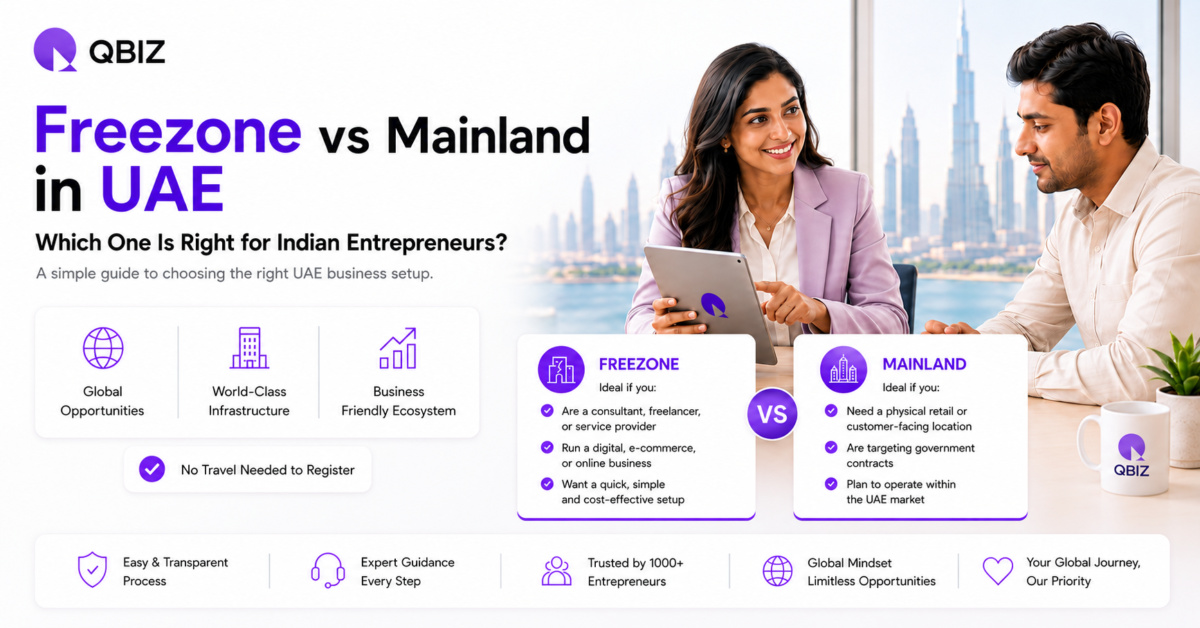
Freezone vs Mainland in UAE – Which One is Right for Indian Entrepreneurs?

Categories
Licensing and Business Setup

Freezone vs Mainland in UAE – Which One is Right for Indian Entrepreneurs?

Setting up in the UAE means making one decision early on. Freezone or mainland? Both are legitimate. Both work. But they suit different situations, and starting with the right one saves you time, money, and headaches later.
Here is how to think about it.


What is a Freezone?

A freezone is a designated business zone with its own setup rules and benefits. You get a UAE trade license, flexible office options ranging from a virtual desk to a physical office, and a straightforward registration process.

For most Indian entrepreneurs, a freezone is the natural starting point. It gets you a legitimate UAE business entity quickly, without unnecessary complexity. Popular options include IFZA, SHAMS, RAKEZ, and Meydan, each suited to different business types and budgets.

Freezones work particularly well for consultants, service providers, digital businesses, e-commerce, and anyone building an internationally focused operation from the UAE.


What is a Mainland Company?

A mainland company is registered directly with the UAE government under the relevant emirate’s economic department.

You can open a physical office, retail outlet, or showroom anywhere in the UAE, work directly with government and semi-government entities, and build a strong on-the-ground presence in the local market.
Mainland is the right structure if your primary focus from day one is operating within the UAE itself. Retail, physical services, large scale hiring, and government contracts typically go this route.


So How Do You Decide?

One question. What does your business actually need right now?

A freezone works well if:

  • You are a consultant, freelancer, or service provider
  • You run a digital, e-commerce, or online business
  • You want to get set up quickly and keep things simple


Mainland works well if:

  • You need a physical retail or customer-facing location in the UAE
  • You are specifically targeting government contracts


The Honest Take

Most Indian entrepreneurs setting up in the UAE for the first time go with a freezone. It is faster, simpler, and gives you a real UAE business presence without overcomplicating things at the start.

Mainland is not a harder version of freezone. It is a different structure for a different stage or business model. Many entrepreneurs start with a freezone and add mainland access as their business grows and their UAE presence deepens. The key is to match the structure to where your business is right now.


Not Sure Which One Fits?

That is exactly what Qbiz is here for. We work with Indian entrepreneurs to figure out the right setup from day one, so you are not rebuilding six months later. Talk to us today.


Categories
Licensing and Business Setup

How to Register a UAE Company from India Without Travelling

You don’t need to fly to Dubai to start a UAE company. Most of the company registration process in the UAE can be done from India. You choose your activity, submit your documents, pay the fees, and get your trade license digitally. The only part that might require travel is opening a bank account, and even that depends on the bank.

Here’s how it works.

Start with one question: What will your company actually do?

Consulting? E-commerce? Trading? IT services?

This one decision shapes everything. Your license type, your freezone, your UAE company setup cost. Most people skip this and go straight to “what’s the cheapest option?” That’s usually where things go wrong.

Get the activity right first. The rest becomes simple.


Pick your structure

For most Indian entrepreneurs looking to set up a business in Dubai or anywhere in the UAE, there are three options:

Freezone — The most popular route for remote setup. You get 100% foreign ownership and simple paperwork. Works well for consultants, freelancers, traders, and online businesses. Common choices include IFZA, SHAMS, RAKEZ, Meydan, and Ajman Freezone.

Mainland — Better if you want to work directly with UAE clients, open a physical office, or deal with government entities. Business setup in mainland Dubai gives you more flexibility inside the UAE, though it involves a bit more than a freezone setup.

Offshore — Mainly for holding assets or international structuring. Not suited for active business operations.

For most people starting from India, a freezone is the easiest starting point.


Choose the right freezone

Not all freezones are the same. Some suit consultants. Some are built for trading. Dubai freezones carry more prestige. Sharjah and RAK are usually more affordable. The right choice depends on your activity, budget, visa needs, and banking requirements.

If you are weighing options, it helps to look at what each freezone actually includes. IFZA, RAKEZ, and SHAMS all have different packages, so the UAE freezone license cost varies depending on what you need.


Documents you’ll need

For most freezone registrations it’s pretty light:

  • Passport copy
  • Passport-size photo
  • Proof of address
  • Completed application form
  • Proposed company name and business activity

No notarization needed in most cases.


Getting your license

Once everything is ready, the application goes in online. The freezone reviews it, confirms your activity, and sends a payment link. Once paid, your trade license is issued digitally. Your company is officially registered.


What about the bank account?

This part varies. Some banks allow remote onboarding. Others want a video call or an in-person visit. So while you may not need to travel to register your company in Dubai, you might need to for banking or visas later. Better to know this upfront.


Ready to get started?

Qbiz helps Indian entrepreneurs figure out the right setup, handle the paperwork, and move forward without the confusion. Talk to us today.

Launch Your Business with

Qbiz Logo Best Business Setup In the UAE